About me

I've been writing stories for years. I think I'm a good writer and I'm willing to bet you'll feel the same way. So here they are. Enjoy them, comment on them, tell your friends about'em, reblog them, retweet them, reread them. I have four stories in my archive so far:
"One day on the Mountain", a story of Lycanthropy, a father, and a son.
"The Boy", a story of a very ambitious and sociopathic fifth grade boy.
"The Easy Girl, A story of infidelity and unpaid sexual debts. This story is very dark.
"Brick The Mighty", a story of an aging superhero.
Although this is primarily a blog of horror, I also write about things that are important to me. I have more stories tucked away; they just need editing. There's even a few novels. There will be more to come.
PS. Feel free to leave a comment. I love comments.

Friday, 16 December 2011

Living with A Stoner

During my third year of university, I had to find a roommate. I couldn’t afford a place of my own. So I did what most people do: I looked at the walls of the Student Union Building (which, at McGill University, was called the William Shatner Centre, and no I am not making this up) where there were housing ads taped alongside the fliers for protests marches and student social clubs.

I was embryonically stupid then. I wouldn’t say I was a genius now, but I’m surprised that back then I didn’t need an artificial lung to take over when I forgot to breath. I met a fellow I’ll call Murray, and despite the filth of his apartment (where we would live), I agreed to live with him. 

I arrived to begin school in September and the horror started. 

I might have been stupid, but he was barely human. He went through terrible marijuana binges where he would shut himself into an the airtight front room (the door would be closed and the door to the balcony was sealed off with insulating plastic), smoke himself into a stupor, and watch TV all night. In the morning before I went to school, I would sometimes look through the window on the door to the front room to see what lay beyond: Murray sprawled on the floor in an insensate heap amidst his twisted sleeping bag, his rear end more often then not poking out from his partly pulled-down shorts. Grapefruit halves with dead cigarettes stubbed out inside them  and upside down pizza boxes littered the floor around him. It was almost exactly akin to the scene in The Texas Chainsaw Massacre when a young women enters a murderer’s house and sees a living room so terribly, insanely messy that it seems to ooze evil and menace. 

I often got ready for class as quietly as possible so I didn’t wake him up. If he did wake up, he would emerge from the fetid depths of the front room, the sleeping bag wrapped around his upper body but his bare legs and sagging underwear exposed, to shuffle into the bathroom and pee, farting like an old man. Then he would shuffle back to go asleep. I never understood why he slept in the front room like he was a stoned and hibernating bear; his own bedroom was four feet away.

When I got ready for class, I often put the phone off the hook. Otherwise his mother would call, wake him up, and I would have to look at him. His mother was rightly worried about him : Murray’s little brother was in his first year of Engineering; his older sister was doing her MBA at Yale. She was worried about her disappointing middle child. So she called every morning if I let her. When Murray would answer the phone, the conversation went like this (I heard this almost every morning so it’s burned into my head. You have to imagine his Montreal urban anglophone accent, which sounds a little like a New York accent. You also have to imagine that she owned the building and he was sort of this half-assed disaster landlord who did absolutely nothing, for himself or anyone.)

“Hi mom. Yeah, I was up. No, I’m going to head out and look for a job. Yeah. I have to go. I have to go. Good-bye. Good-bye. Good-bye. I have to… Good-bye. Okay, I’m hanging up the phone. Good-bye. Good-bye.” This went on for many minutes, and sometimes happened several times in a morning. Sometimes, on snowy days, she’d arrange for him to clear the walk in front of his uncle’s Jewish tombstone store. That was all he ever did when I lived with him. He was a perversely fascinating creature, and like Gollum, he didn’t know how hideous he had become. 

But somehow, somehow, through those twists of fate that happen to stoners and the unfortunate idiots who live with them, our female roommate left (understandably - she probably would have killed him if she hadn’t left), and Murray rented a room to someone even worse that he was. 

Joey was in his early thirties and psychotic. By psychotic, I mean he talked and screamed to himself, and kept a long line of pill bottles on the mantle of his room. Thank God he was smaller than me, or else I would have been terrified of him. Murray hated him, and for a while we sort of bonded over our fear and loathing of this chaotic and doomed man.

Then the inevitable violence happened. 

Joey liked to smoke when he wasn’t coasting on his many suppressants. The deal he had struck with Murray was that he would smoke with his door closed, since I hated the smell. But Joey began to smoke with the door open, and the cigarette smoke reached me. It was the end of the year, it was getting hot in that Montreal way, and the apartment was on the third floor. 

One day I charged into the living room, hot, angry, and infuriated that the smell of cigarettes had come into my room. I yelled that he had to close his door. He came out. 

“I need the fresh air, fuck!” he yelled (the use of the word ‘fuck’ is at the end of a sentence is a Montreal thing, and it comes from Quebec french)

I charged and he met me in the middle of the living room. For a few seconds I had him in a headlock, him grunting in rage, and then I was saying: “Joey. Stop. We have to stop. Jesus Christ, we have to stop.” I let him go. 

After he rose, I held out my hand, he held out his, and we shook. He went back into his room. I looked at my arm, where there was a gash that had somehow opened during that encounter. When Joey came out to the kitchen to fix himself a snack and smiling as if nothing had happened, he had a flap of skin two inches long hanging from his arm. 

Beyond my initial and heat-driven rage at Joey, I wasn’t angry had him. He was ill and couldn’t be anything else. I was angry at Murray for renting a room to this man. 

I moved two days later, Murray screaming at me as I carried my stuff to a rented van. He said I owed him money, and I insisted that he’d made my life hell and that I owed him nothing. I probably should have payed him something, but hate is a powerful motivator when you realize you can effect revenge through money. I wanted his parents to be angry at their 26 year-old son who couldn’t run their investments and rented to psychotic welfare cases. But more than anything I just wanted to be finished, to not contribute a single cent more of my worth to sustaining what I realized was a rotating door system of college kids and crazy people who lived with this useless man-child.

This happened a long time ago, but I still think of it from time to time, and wonder if Murray (who would now be in his mid-forties) is still offering himself as a roommate to bewildered college kids, or if the great wave of money and gentrification that swept through downtown Montreal swept him up as well, along with his parents’ apartment buildings and the tombstone store up the street. I almost hope not. He added some clownish colour to that great city and I learned a lot when I lived with him. 

Thursday, 15 December 2011

I won't buy Limited Editions

I’m never going to buy a limited edition. There, I said it.

I prefer just plain old bookstore books, or second-hand books. Some of my best books have been second-hand. I’ve bought A Tree Grows in Brooklyn, Ulysses, all my Doris Lessing books, Blood Meridian, and TED Klein’s Dark Gods and The Ceremonies - all at the second hand store. I spent less than thirty bucks for all those books and I treasure them.

I should give you a little background here - for nearly a decade I was taking care of two children. When my first son was six months I was with him full-time, and when the second was three months old I was full time with him as well. I was up to my elbows in clothe diapers and baby shit, and I didn’t have much time for anything. I’d been a devoted reader of horror fiction but I’d fallen away from it. I no longer went to horror movies and I didn’t read very much at all. When the oldest started going to school, I slowly began to emerge from my self-imposed cultural exile and dared to read again. Since publishing in general has become so web-centred, I got on the internet and looked for horror. Every horror writer on earth has a website; there are discussion boards everywhere. There are a whole lot of horror authors I never would have known existed if I hadn’t ventured out and looked at the online world of dark fiction. 

I learned a lot about limited editions - beautiful, signed, numbered and lettered (whatever that means), new or re-released, and on sale for fifty or eighty bucks a pop with the near certainty it will sell for mega-cheddah on the secondary markets. Every few days a little notice will pop up : Hey kids, there are only ten copies left of Satan’s Zombie Ate My Gramma so you’d better set eighty bucks aside! 

I can’t bring myself to ever buy a limited edition. I can’t understand why anyone else would want to buy one either. 

Whenever I’m out in public I see people reading books. Like anyone, I read the covers. I’ve only ever seen two horror authors read by the general public - King and Koontz. No one else, save for the one time I saw a young woman with World War Z. King and Koontz are the biggest names in the biz, and take up entire shelves. Incidentally, the other two space-takers in the shelves of bookstores (at least in Canada) are women: Kelly Armstrong and Laurell K. Hamilton. All four sell a tonne of books, and their books are easy to find.

I understand that the industry is suffering, that it’s hard to get on those shelves in the first place, and hence the mail-order, small-press route many authors are taking. But… why not ebooks? Why not cheap physical books that are made cheaply and ship fast? Why the necessity to guarantee that your reader’s have received a book that no one else will be able to read? I think books should be made available for anyone who wants to buy them, but that’s just me. I like to think there’s a place for the reader that no one talks about - the guy who wants a quick and easy horror book for the weekend. When done, it will be either given away or lost under that bed amid the dust-bunnies and old plates. 

I can see the logic: if a books comes out in limited numbers, and there is no way to read it in any other form save by that limited, numbered edition bound in pixie-hide, then your primitive brain tells you that it must be something special. Yet whenever I’ve read a borrowed copy, or read the previous incarnation of a book that has become a collector’s-item re-release of a classic horror novel, I’ve been unimpressed. I get the feeling that if you dusted the mystery off this book that has rarified itself to near archeological status, it wouldn’t stand a chance next to King or Koontz. 

So what are we buying when we buy a book that is designed to become a collectible, much like those plates or coins you see on the infomercials? I have no idea. I’d rather just read a good book. 

Saturday, 10 December 2011

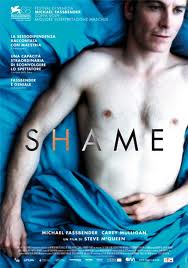
'Shame' - Can we talk about our global porn addiction?

I can’t wait to see Shame. I’ve heard opposing reviews - it’s slow, arty, it’s about subject that we’ve become far too prudish about; it’s brilliant, brave, about a subject we’ve become too unhealthily obsessed about. 

It’s about sex addiction, and thank God someone has made a movie about it. I’ve seen movies about alcoholism, drug addiction, and even gambling addiction, but never legitimate sex addiction. It’s high time someone’s tackled it, brought it out into the open. I’d love for people to see this movie and maybe ask if they see parts of themselves staring back. 

I’ve heard a lot of talk about addiction - how to solve it, what causes it. What I keep hearing is this - you become more addicted when the supply is readily accessible and cheap.

Let’s talk about porn. When I was a teenager, my friends and I had to walk across town and find the one East Indian corner store that rented VHS porn. You had to pay real money to see porn. You brought it home; it was a big, square piece of hollow black plastic, and we had to keep it safe. You had to hide it someplace away from your parents. When you and your friends nervously watched the stuff, you had to keep your hand on the remote in case your mother wandered downstairs in her nightgown to see just what the hell you all were doing. And then, when you were done and it was the next day, you had to bring that tape back to the store. You had to rent, carry, hide, and then return pornography by a certain date. Porn was like a library book. Think on that for a moment. 

I can’t quite explain the pre-internet, corporeal nature of porn. You had to rent the stuff, or search around in your dad’s closet where he kept it in an old suitcase. Your dad’s porn was the strangest porn: glossy European magazines where skinny men with moustaches and black socks fucked dishwater blonde girls who never stopped smiling as though they were smelling strudel straight from the oven. My own dad had all those magazines locked away alongside something called The Anarchist’s Cookbook (19171), which taught you how to make bombs, grow marijauna, pick locks, and hack old payphones. Porn took trouble to acquire and keep, caused trouble when it was found, and was hard to find if you were underage. 

Then the internet arrived.  ASCII code could be converted into pictures. Porn was free, and for the first time, we found that freedom had nothing to do with cost. Porn was released, free to meet other porns and have pornlets. Porn had had it pretty rough before; it was once trapped in steaming, sticky theatres, forced into hardcore labor rooms where the doors were hung with seedy beads, kidnapped and held for ransom in the sun-baked California warehouses. 

Now it’s confusing. No one pays for porn, but yet the stuff is still being made. I can order it on my cable pay-per-view, but what would be the point of that? Porn is everywhere. It’s easy to find, to acquire, effortless to store in the limitless and Stygian depths of our computers. Yes, we all leave massive, day-glo, virtual computer porn trails like we were massive and horny slugs, and we would be fucked if a computer tech were to go over our hard drives. But what are the odds of a cyber CSI team confiscating our machines? There are billions of us!

Which leads me back to Shame, and what it might mean for us. One of our most potent drugs is free of both cost and risk; our kids are consuming it at twelve and younger. Porn is part and parcel of sex addiction.This movie could start a conversation.

I’m not anti-sex; I’m not going to be like Ted Bundy on the eve of his execution and conveniently blame everything on porn; I won’t suggest we start banning desires. But this movie could at least, much like the pro hockey discussion still in its infancy about concussion, start us talking about this massive and interconnected beehive of masturbation stations, and what it means for the brains of our future generations. 


Thursday, 24 November 2011

Some Books on Puberty, Because I'm a Geek parent

A few days ago a package from Amazon came in the mail. There were some regular kids’  books, and then two not so regular: What’s Happening to Me? and Where did I Come From?, both by Peter Mayle. 
These two are classic texts in the puberty genre. They’re not too judgmental, and the facts are almost completely correct save for one notable exception - perhaps to reassure insecure pubertal boys, the book calmingly states that although penises may cover a wide range of sizes when flaccid, they are all generally the same size when erect. Any woman who’s been with more than one man, and any man who’s seen porn, knows this is not true. 

The night they arrived, my wife and I leafed through What’s Happening to Me? while our eight year-old leafed through Where did I come from? in his room. 

This, boys and girls, is a wet dream. Wet because he's in the
ocean, I suppose. 
I’m not complaining about these books. Not at all. I’m glad my kids are going to read them, and not get their sex-ed from the psychotic bed-wetter at school. There’s no religion in these books, no proselytizing. The explanation for masturbation is adorable - kids’ bodies are ready for reproduction at thirteen, but kids aren’t socially or emotionally ready for reproduction. Nature has invented a solution: Rub one out! It’s not bad, but sometimes you may feel embarrassed. To illustrate this point, there is a wonderful picture of a tiny, round-bodied little ginger-haired boy sitting in bed with his hands down his pants as a long and judgemental lighting bolt points angrily at him. The books covers feelings, curiosity, and even reassure us that having pubic hair that is not the same colour as the hair on our head is normal. I can’t really complain.

Except… this books makes sex look no different than your average kids’ book. It’s cute and acessible. The boys and girls are little caucasian cherubs that resemble Ewoks or cabbage-patch kids. It demystifies sex and while this is good on the surface, I wish I could tell my kids what I’ve gleaned. I wish I could tell them this:

-----------------------------

Look. Sex is one of the three most primal things we do. The other two are being born, and dying. Being born is something you get out of the way quickly. But the other two are inextricably linked. They are tangled in a greasy Gordian knot that for most of our life-span we pretend does not exist. 

We try not to die, and in the time that we succeed in not dying, we’re trying to have sex. Evolution wired us so that we are fooled into thinking that we have sex for pleasure, but we do it to survive. It’s about passing on enough of your genes so that your death becomes moot. 

Got all this, I hope? This means that sex is complicated, and it’s powerful. We’re doing our best, through a combination of internet porn and female empowerment, to make sex seem like a recreational sport. It’s not. It’s both the most umimportant, pleasurable, and fun thing you’ll ever do, and at the same time it is a force that has enslaved populations and countries, toppled kingdoms, fomented mass murder, inspired car design, and was nearly the undoing of an otherwise brilliant and unbeatable American president. It’s spawned massive government-regulated sex industries and made countless innocent children disappear. If you look at someone under the age of thirty, there’s a good chance that he or she is thinking about it. It’s powerful. 

Is it something to afraid of, you ask? No. It’s a natural phenomenon, like wax and wane of the moon, or the vast sheets of ice that fall from icebergs in the Newfoundland spring. It’s not different than the leopard seal that hunts penguins, who are hunting food to feed their chicks. It’s life and creation, and I hope you have a chance to be involved in it. 

You don’t want to have kids? You don’t want to join the Circle of Life? That’s fine. I want you to do what makes you happy. You’ve been born, you’re going to have sex, and you will eventually (and I don’t want to think of this) die; you’re doing all three primal things anyway. But every day you will be interacting with people who are on their journeys from, towards, or through these three things. You have to be aware of that, and these earnest and funny little drawings aren’t going to be telling you any of this. 

Rather than have you read this, your mother and I are probably going to muddle through your sex education like all parents do, and you’ll recount the awful discomfort you felt when I try to lecture you on ‘taking the gentlemanly precautions’, or when your mother asks you if ‘you really like that girl or whether you’re just using her, because she seems really nice.’ 

We’ll make mistakes, because we’re trying to educate you on something ephemeral and elemental.

In fact, the more I go on, the more futile it seems. How about I change tack and just be practical?

Wear condoms, know where the clitoris and G-spot are, try not to cheat because you’ll eventually get caught, don’t be too smug to your friends if you find a Friend With Benefits, and above all be nice. Be respectful to strippers or the doorman will have legal reason to beat you up. Porn isn’t a bad thing but I learn to hide it, dammit. 
There. That wasn’t too bad, was it? 

Tuesday, 22 November 2011

Occupy Vancouver and the God of Greed

Occupy Vancouver disappeared today.
The city and the police came early in the morning when it was still dark. It had been raining hard, and I don’t think the protesters had much fight left in them. They moved over to Robson street to set up an encampment by the Law Courts. As I write this it is pouring rain, and a torrent of water is pouring off the corner of my roof where the eavestrough is broken. It’s a miserable night be be outside in Vancouver. But that is nothing; in Calgary and Ottawa it’s not wet, but bone-chilling cold. 
World-wide, the media has turned against the Occupy movement. They tell us the people have sickened of the protestors, but I think their instinct for a story has made then attempt to engender a conclusion onto what could have been history. 
Yes, the message was too amorphous, but the threat - the inequality lobbied in legality, the whole-sale theft of public funds by the very men who used to work for Goldman-Sachs - is amorphous. Mark Carney, the man who runs the Bank of Canada, used to work for Goldman-Sachs, and is now heading a technocrat cabal intent on ‘solving’ the Greek debt crisis. How does this Harvard-educated financial whiz plan to do it? The same way the 2008 crisis was ‘solved’ - billions in public money. That money will disappear. It will go away, and thousands of banking executives will receive bonuses, and send their high-performers on ‘seminars’ and team-building camps in the Caribbean. When the next crisis erupts, this will happen again. It’s a rescue operation for the rich. 
The amorphous message is stop. Stop the business as usual. We’ve been in league with a monster.
The derivatives, the high-finance machinations, are so complex that even the smartest financial minds in the banking industry can’t understand them. The market; the interconnected brokerages and exchanges, the fast-as-light system on everything runs, are nothing less than a massive body with a circulatory system, nerve endings, lungs, a stomach, and a vast appetite. Every trader has unwittingly become a cell, and every bank and firm has become a nexus in an individual system. We’ve tricked ourselves into thinking we’re farming our financial system like a crop, but it’s a monster to which we pay tribute. 
It doesn’t care about us. Through the science of incorporation, we’ve given it a brain that feels no empathy. It knows that if we kill it, its colossal corpse will rot and poison us all. So we feed it, and it gives us a meagre something in return. 
There’s this writer by the name of Howard Phillips Lovecraft. Anyone who reads horror knows about him. But for those of you who don’t: he was a visionary author of the early twentieth century. He led a rough life, died in poverty, and left a body of work that became the most influential material in horror. He wrote of Forbidden Knowledge, and Elder Gods. What if huge, ancient and unspeakable creatures were watching us? 
But we don’t need Lovecraft anymore. We’ve had our own elder God all along; it merely needed us to become so interconnected that we unknowingly made a vast and virtual body for it. Then the Elder God moved right in. 
An old God, and a convenient temple
Its name is Greed, and now it’s as real as Wikipedia or Google. It’s a construct, but it’s more real, and more reactive, than anything present in the Judeo-Christian mythos, or Islam. It may as well be real. Our God is Greed. It’s ancient; it’s lived as long as Humankind has competed for the comeliest mate, or the ripest berry patch, or the fertile valley with a river running along the bottom.
 But now we’ve given it a home, and its disciples, its adherents, are impossible to fight or prosecute. So far, the only thing we’ve thought to do is camp out near Greed’s temples. 
So the next time you walk by your fading and embattled local Occupy encampment, spare a thought for these folks. They’re not perfect, but neither have they blindly placed their faith in the disciples of Greed to fix everything. They’re looking for a new way - you can see it in their Elder tents, their cookhouses, their communal organizing. 
My kids and I walked by there on Sunday. It didn’t look violent or filthy. All we saw were people camping on wet ground. They weren’t harming anyone. They certainly weren’t orchestrating the transfer of billions, and they don’t deserve this anger. They’re not the bad guys. 

Wednesday, 16 November 2011

Two Reviews - 'The Last Werewolf', and 'The Caretaker of Lorne Field'

Just two quickie reviews. I used to do long ones, but the short form seems to be more appealing, and more in line with the ‘wham-bam-thank-you-man’ tastes of blog readers. 

The Caretaker of Lorne Field, by Dave Zeltserman - This short book has been viewed as Horror’s second coming by some. The reviews on amazon and on the Horror Drive-In were so effusive that I thought I had another The Passage on my hands, which meant I might be brutally disappointed. Also, the cost of the Ebook was almost nineteen bucks. But lately I’ve seen some collectible crud on sale for way more than that, so I thought I’d take the plunge.
It’s a quick read; I finished it in a day and half with what little reading time I have. It’s the story of a man who is the hereditary caretaker of the eponymous Lorne Field. The field is home to strange creatures called the Aukowies - plant-like monsters that are a melange of the Triffids, Audrey from Little Shop of Horrors, and the legendary Mandrake plant. If left alive, an Aukowie will mature in eight days, pull itself from the ground, and destroy all life on earth. You don’t see much of the Aukowies; the book hints that mature they are nine feet high, move at about two hundred miles an hour, and are armed with what appears spinning thorns as powerful as industrial wood-chippers. 
The caretaker, Jack Durkin, is a man who gave up a pro ball career, happiness, and success, because a contract signed three hundred years ago makes him obligated to follow in his father’s footsteps, and his sons to follow in his. He has to pull the ‘weeds’ by hand from the field, for twelve hours a day, until winter comes. He gets free use of an old, dank house and eight thousand bucks a year. 
Here’s where the conflict starts: it’s present day, and all the respectful townsfolk who used to hold the selfless caretaker in high esteem, who used to give him and his family free food, are almost all deceased. The age of superstition has passed. Jack’s sons hate him and are embarrassed by him; his wife (whom admittedly Jack has used as a breeding sow to bear his sons and future caretakers) hates him with an almost homicidal passion, and the younger townsfolk think the Caretaker job is a ancient scam and that Jack and his descendants may have been having them on. 
This is a short book, but it works. The Aukowies, though barely described, are a constant and lurking presence. Wisely, the author doesn’t give an explanation, or an origin, and so the book takes on a mythic aspect. As the book progresses, the questions of reality, mental illness, and faith arise, and soon even the main character begins to question himself as much or more than the other characters. 
Top marks for this book, as long as you’re not expecting anything epic. It’s short, but it does everything a classic story should.

The Last Werewolf, by Glen Duncan - This is a tough review. 
Glen Duncan is a great writer, and uses his English classicism, his education, and his vast, incisive vocabulary to craft his brilliant verbiage. He’s clearly a fan of Nabokov, and although he pokes fun at Martin Amis in this books (‘Amis’s mouldering novelties’), he owes much of his style and many of his characters to Amis’s classic book Money. He’s technically a better writer than any horror writer ever. But is he a better horror writer? 
In the back pages of my cheapo edition of Moby Dick, there is a collection of essays. One is by DH Lawrence, and it’s a treat to read one genius as he dissects another. He pokes fun at Melvilles plodding pendantry, his endless lectures on history and biology, but admits that beneath all of Melville’s fluff beats the heart of a true mystic. 
So… I hate to do this. Glen Duncan is what this genre needs: Most horror writers could never in their life craft a sentence like he can. He’s a classically trained dancer in a field where most are outside shuffling on a sheaf of cardboard for spare change. It’s a pleasure to read this book. His insights into werewolf transformation, the nature of immortality (and I think he borrowed from Amis’s short story ‘the Immortals’), the lurking, flickering spirit of lust and hunger as it dashes between both states, are fabulous. But there’s… no there there. 
I was waiting for that pulse, that black throbbing pustule that makes great horror. But Jacob Marlowe, the immortal and titular main character,  is terribly bored. He’s seen it all. Duncan has made the mistake of deconstructing the werwolf myth too much. Jake is rich, constantly horny, and dealing with a zealous anti-supernatural agency that has destroyed all the werewolves in the world ( their greatest triumph was the making of a bait website that advertises lycanthropine hook-ups called Werewolf-fuckfest.com) and are zeroing in on him. There’s lots of action and gore. But I was never frightened, creeped out, or otherwise disturbed. I was looking for horror, and instead I got a comedy of wits and manners with werewolves. 
But read it. I wasn’t frightened, but a lot of horror books aren’t frightening. So many horror books are horribly written, but this was wonderful. Yes, there is a slight feeling that the author is genre-slumming to make a quick buck( or just a buck period, since it’s tough to make a living as a writer), but nonetheless his talent should be welcomed. 

Monday, 7 November 2011

Monsters (2010)

  This movie gave me hope. Monsters, a simple alien invasion story, gave me hope. 
  I've been worried about horror. It's not just the zombies, or the publishing houses that are built on zombie fiction, that worry me. It's the fiction, the stories. Horror, film or text, is now horror first and story second. Writers approach horror first with the scare, blood, rape, or monsters, before they even think of a story. But horror is nothing without real people, real surroundings, real language. Good horror is a good story first. Some of Stephen King's best-known works aren't horror; he's a great storyteller who happens to like scaring people. 
   Monsters is about two people, a man and woman, travelling through Mexico trying to get home to the US. You can almost taste and smell the tortillas a young Mexican mother makes for them; you notice the dirt and grit on the government signs warning of restricted areas. You can feel the tension between the two leads as they try and fail to always show themselves at their best.
  They just happen to be travelling through a land colonized by 300-foot tentacled aliens who are dead ringers for Lovecraft's Cthulhu. 
    But it works. The monsters are on CNN, and in the US and Mexico, life goes on. Judging by the signage on the roads leading to America, we can see there is another government agency created to deal with the threat, and that agency has its own logo, and each of its initiatives has its own logo as well. On the Mexican side of the border, there are religious shrines built in honour of the victims (think of pictures of children in their Confirmation clothes). There are protest signs against the collateral damage the anti-alien bombing causes. In the background of almost every shot there is a gutted building, destroyed either by bombs or aliens; the movie is never clear in that respect. 
    The movie makes wonderful educational point for writers and directors: any disaster that does not utterly destroy our civilization will instead give us signs, walls, protocols, curfews, a new vocabulary to explain what we see every day, and a new economy to deal with all those people who need things, or need to get somewhere fast.  But we will still drink, eat, care for our children and each other, and get on with life. Describe those details and you tell a story the audience wants to hear. Describe those people, and you won't need the monsters all that much. We'll see them through the eyes of those characters you worked so hard to flesh out. That's how horror works. 
   Oh, and if you want to add buckets of gore after you've successfully created your character and background, that's okay too. Just thought I'd add that. I'm not anti-gore, I'm anti-suckage.